The speaker at this meeting was Rooven Pakkiri, who describes himself as helping business managers in organisations to use social media tools to further ‘Social Knowledge Management’.
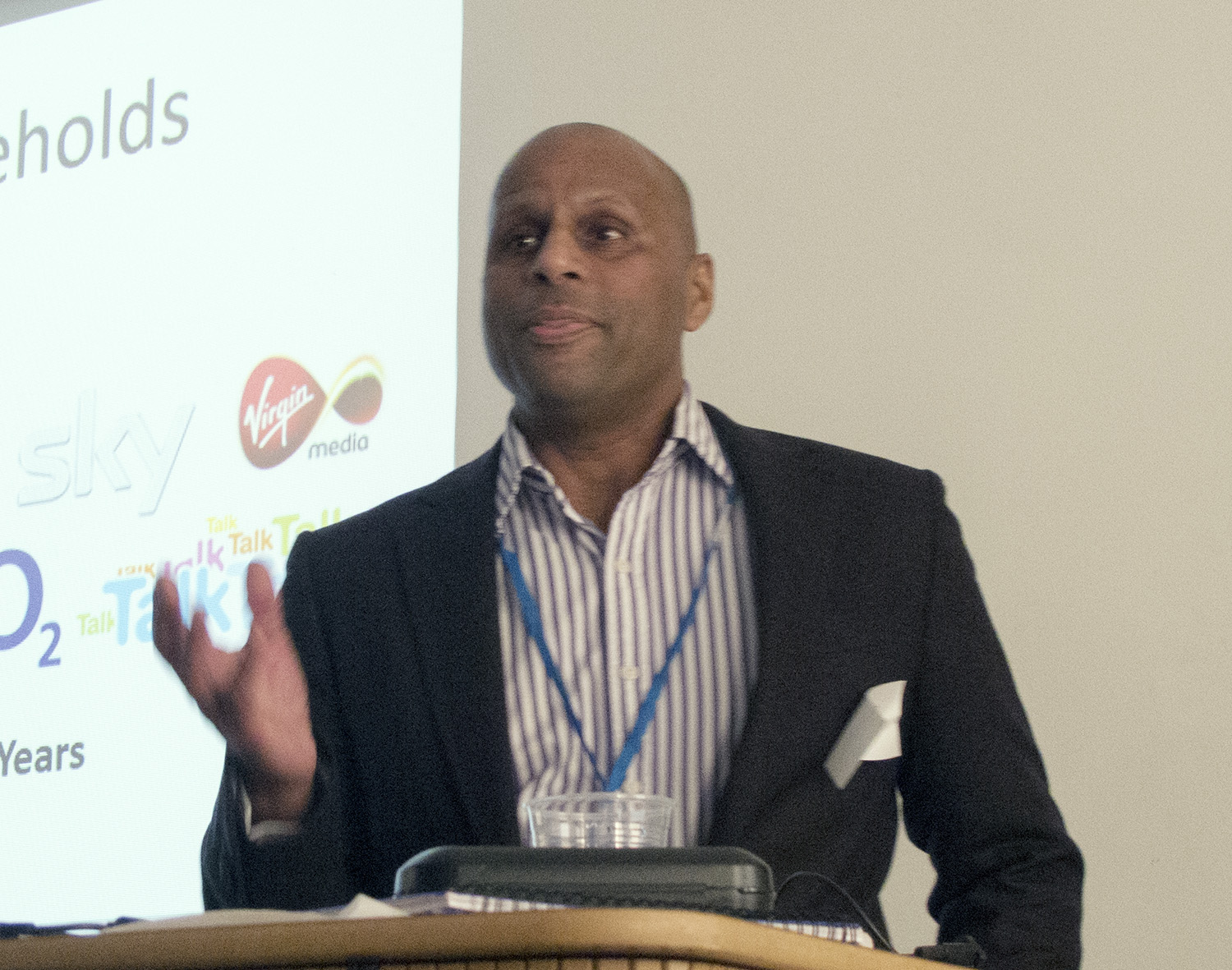 When he was working for the National Westminster Bank in the late nineties, Rooven attended a training session introducing the Internet, which for him was a transformative experience. He concluded that, as this technology would ‘level the playing field’ between large and small organisations, the main differentiator between successful organisations and those less so, was how they made use of ‘human capital’.
For me this begs a few questions. For a start, what is human capital? I think that Rooven specifically equated it with knowledge and, to be more specific, with ‘intellectual knowledge’. This is probably truer in some business contexts than in others – and, of course, it’s an opinion well tailored to appeal to Knowledge Management types. However, there are fields of collective human endeavour where plenty of other human attributes contribute a great deal to the success of organisations – for example, empathy and kindness, loyalty, patience, attention, bravery, honesty and imagination.
It also seems clear that there are many kinds of organisation where the key to success is a very material form of capital, where, for example, you need money to invest in building plant, access to cheap electricity and perhaps political leverage, as well as hiring people with the requisite knowledge and skills.
Rooven asked us to recall when we first used Google. (Actually, I thought further back, to the ‘fast’ aggregated search facility on GeoNet, to Gopher and, when the Web came along, to Altavista and OpenText.) The reason we are able to find out so much online, he said, is because it is in human nature to want to share information.
He also set up a dichotomy between broadcast television and ‘the Internet’ (I think he meant the non-social-media side of the Web) on the one hand, and the likes of Facebook, Twitter and Instagram on the other. The first set he characterised as ‘broadcast media’, and rather old hat, and the latter group as made up of user-generated content.
I’m less inclined to see these as opposed; rather, each form has its strengths and weaknesses and we combine them in ways that work best for us. Many tweets and Facebook postings contain short-form URL links to blog posts, YouTube videos, online articles and other more considered forms of exposition.
There was some discussion about the degree to which people are prepared to share their knowledge, especially if their relative monopoly of it confers status and power. Rooven talked about some organisational practices, and technology deployments, which could be used to encourage people to share knowledge within their organisation, for example ‘reverse mentoring’, where a junior person shadows a more senior and more knowledgeable employee and writes blog posts representing the senior’s knowledge and insights.
There is an issue here about what kind of organisational culture encourages people to part with knowledge, the possession of which may well make them more secure in their position and less disposable. It reminded me of one of David Gurteen’s knowledge cafés at which someone from the HR department of a consultancy enthused about their knowledge sharing culture, while in discussions after, people from PWC said you’d be mad to give any advantage to your ‘colleagues’, who were always scrambling to climb over you to the top of the heap.
Then Rooven cited Deloitte as saying that, these days, employees have to be treated more like customers than subordinates. Again, I think that can only be true in certain organisations and work-roles. I see no evidence that the modern shop-worker, bus-driver, nurse, teacher or fast-food restaurant worker is treated with this sort of consideration.
Rooven’s next foray into knowledge transfer looked at the enhanced opportunities for self-directed learning which the Web gives us access to, for example videos on YouTube, TED talks and participation in online groups. I think Rooven’s view is largely that any sufficiently self-motivated person can, by dint of tracking down online training materials and doing a lot of study, succeed in learning anything. He spoke approvingly of Malcolm Gladwell’s assertion that 10,000 hours of study and practice can turn anyone into an expert. (This is from Gladwell’s book Outliers, which Steve Pinker has described as made up of ‘cherry-picked anecdotes, post-hoc sophistry and false dichotomies’; I certainly think that autodidacticism doesn’t suit everyone and that interpersonal knowledge transfer still has its place.)
What does it take to make knowledge transfer an ongoing phenomenon in an organisation? Rooven’s business is based on working with HR departments to get collaboration and knowledge sharing going, using network software platforms such as Yammer, Jive and Connections. Here I would have liked more use cases, though I guess Rooven is hampered by issues of confidentiality.
There is, however, some literature to draw on here, such as Julian Orr’s study of Xerox photocopier and printer repair technicians, and Etienne Wenger’s case study of staff at a medical insurance firm, which informs his book Communities of Practice. But this can fall flat, as seems to have been the fate of the Local Government Association’s Knowledge Hub.
Rooven suggested that people who act as ‘connectors’ between people and networks are amongst the most valuable people in companies. This is virtually identical to Wenger’s thoughts on the role such people play – he calls them ‘brokers’.
Towards the end of his talk, Rooven mentioned a computer game where the player has to put together a winning football team by choosing the best mix of players with different talents. He asked, what if companies similarly assessed the human capital attributes of their employees (and potential recruits) and put together ‘teams’ fitted to solve the important problems of the day? Here at least Rooven appeared to acknowledge that intellectual knowledge is only one of a number of desirable aspects of human capital.
I was less impressed by his suggestion that the business world should move towards a general ‘labour on demand’ model, shopping around in a skills marketplace and using short-term contracts to get jobs done. Doubtless that is the logic of capitalism, but it is a poor recipe for human security and development.
Rooven spoke for longer than is usual at a NetIKX meeting and, after the tea break, he offered to continue with a demonstration of some of the software platforms he uses, but we opted to stick with the NetIKX tradition of syndicate groups, of which there were three, each discussing a separate question.
I was in a group that discussed whether business is moving increasingly from the domain of the Complicated to that of the Complex. That is, is the world of business akin to the engine of a Ferrari, which a competent mechanic can disassemble, fix and reassemble? Or is it like the Brazilian rainforest, a complex ecology of interplaying organisms and factors, where not only is it impossible to know everything about the system, but you can’t even know what factors you don’t know about? (The ‘unknown unknowns.’)
Rooven said this was from an article in the Harvard Business Review: ‘A Leader’s Framework for Decision Making’ by Dave Snowden and Mary Boone. It appeared in November 2007 and you can find it here: https://hbr.org/2007/11/a-leaders-framework-for-decision-making. The article presents Snowden’s ‘Cynefin Framework’, in which a situation requiring decisions to be made is analysed as belonging to one of four possible Domains: Snowden labelled these as Simple (later changed to Obvious), Complicated, Complex and Chaotic. Rooven’s question focused on the middle two domains.
Although the basic either/or question was hardly worth discussing, we pushed the topic further. Organisations have a dynamic life in which some aspects are complicated, but rules have emerged to regulate them. Sometimes the organisation finds itself struggling with complexity where the dynamics are hard to figure out, but that’s not cause for despair. Snowden’s recommended response is to probe the situation by devising experiments that are ‘safe to fail’, and see which of these interventions move the situation in a desirable direction.
So, we had quite a lively syndicate session, even if the connection between the question we’d been posed and the topic of Human Capital was very loose.
I’d like to extend this topic towards other human attributes, and towards know-how and tacit knowledge, not just what organisations think they can squeeze out of employee’s brains.

Blog for the May 2016 seminar: SharePoint
/in Uncategorised/by NetikxIf your Organisation uses SharePoint, or is thinking of doing so, the May NetIKX seminar was just what the doctor ordered!
The first speaker was Nathaniel Suda and his talk followed this format: first he discussed MicroSoft’s Sharepoint road map, then he looked at probable future trends and finally gave some examples of SharePoint in action. All of this was accompanied by a rather fine set of slides. He explained that he himself not only works as an implementer for SharePoint, but also has a role providing feedback to MicroSoft so that they are able to learn from user experience.
He asked the audience to identify which of us are currently using Sharepoint and what they were using. There was a variety of users of different versions, and also many people who were not in organisations that use SharePoint and were just wanting to learn more about it. He certainly helped us understand the different versions available and how they interrelate. The trend has been towards Cloud and on-line versions, but he explained that the hybrid model which gave users a choice whether to go for more cloud would still be available for a while. Although Cloud was gaining ground with users there were no plans to shut down other versions yet. He believed that integrating the different options within the various versions was an appropriate strategy.
He identified new trends, for example different options you could choose to add to SharePoint. One of his examples was ‘Delve’, a system that identified who each user worked with regularly so it could customise views to match this. No longer would a worker be hobbled by the organisational organogram. Collaboration would be supported on a much more practical basis. MicroSoft’s vision was that the most recent version of SP would form a foundation, on which many more functions could be built. The exciting prospect of more integrated systems and innovative new applications was the hope for the future.
He then drew on his wide experience to discuss individual cases that he had worked with, so we could see the different ways that this one software could be used. It was a valuable talk that gave us an idea of a vision and road map that the powerful minds at MicroSoft are working towards.
In contrast Cerys Hearsey had her feet firmly on the ground, looking at the practical problems of implementing and managing the potential of a SharePoint system. A hugely enjoyable speaker who also had knowledge that gave us a glimpse into the difficulties as well as the successes of organising and setting up organisational wide collaboration systems. Hearing her gave comfort to those of us who have struggled with SharePoint. It is not necessarily simple! But she had a clear and optimistic message. The system can provide amazing potential to users, but not without having clarity in what it is supposed to deliver and how it needs to be managed to allow real people to extract the benefits identified. The software in use would only be as good as the care and capability with which it I introduced. It is essential to be clear about the precise benefits required, how the system can deliver them and the user behaviour required to harvest these benefits. Out of the box was not necessarily wrong and some customisations could be more harm than good, but tailoring how the system is used to match the way people work has to be considered before the release starts.
It was a long hot afternoon, but hugely worthwhile. After learning so much from the two speakers, we settled down to our syndicate sessions, where people share information about their organisations’ experience. It is wonderful to share with others doing similar work to you or to learn from people a little ahead of you. At the end of the meeting everyone gave feedback on the meeting and the response was enthusiastic.
If you work with SharePoint or your organisation is thinking of moving this way, don’t plough ahead all alone. There is so much useful experience out there. For only £60 you can access NetIKX members and their insights, as well as a large store of information from other past events. Oh, and as a bonus, members can attend all the other meetings we hold for the coming year. Hope to see you at a NetIKX meeting soon!
Lissi Corfield
May 2016 Seminar: SharePoint and Office 365: getting value from enterprise collaboration solutions
/in Corporate knowledge and information management, Events 2016, Organisational K and IM: document control and storage, Previous Events/by NetikxSummary
The shift from traditional ‘document management and information push’ Intranets to more socio-collaborative technologies continues to accelerate, as organisations embrace new Social Business Models. Microsoft has cemented its place as one of the key players in the enterprise technology space and is well positioned to influence greater productivity and increased value through more seamless integration between Sharepoint and Office365.
But end users are often caught in the middle of these strategic changes and are left confused or remain disengaged from these new collaborative tools. They perceive Sharepoint as a “Swiss Army Knife” solution, built for flexibility but requiring lots of effort to make it do what you want it to do, rather than an out-of-the box solution. The first speaker at this seminar, Nathaniel Suda, explored Microsoft’s overall direction of travel and what changes to working practices can be anticipated over the next 2–3 years, as organisations upgrade their Sharepoint and Office products. The second speaker, Cerys Hearsey, discussed some examples of where Sharepoint/Office365 is working well and provided some ‘best practice’ tips to aid usability and encourage engagement.
Speakers
Nathaniel Suda is the only consultant in the UK to simultaneously hold a strategic advisory position at Microsoft UK in both Business Intelligence and SharePoint, on Advanced 365.
Cerys Hearsey is the Lead Consultant and MD at Post*Shift.
Time and Venue
2pm, Thursday 19th May 2016, The British Dental Association, 64 Wimpole Street, London W1G 8YS
Pre Event Information
None
Slides
A copy of Nathan’s slides are available to current members in the Members’ Document Store.
Tweets
#netikx79
Blog
See our blog report: SharePoint
Study Suggestions
None
Blog for March 2016 Seminar: Storytelling For Problem Solving & Better Decision Making
/in Netikx/by NetikxConrad Taylor writes:
On 22 March 2016, Ron Donaldson came to speak on the topic ‘Storytelling for Problem Solving and Better Decision Making’. This attracted nearly forty people, a larger than usual NetIKX attendance.
The focus of Ron’s work is helping organisations and groups of people to solve problems and improve understanding. He is eclectic in the workshop exercise methods he uses, drawing on Cognitive Edge methods, Participatory Narrative Inquiry (https://narrafirma.com/home/participatory-narrative-inquiry/) methods, and also the ‘TRIZ’ methods (www.triz.co.uk) and models for inventive problem-solving developed in the Soviet Union by Genrich Altshuler.
Ron describes himself as a ‘knowledge ecologist’. He has a degree in Ecology and Geology and a professional interest in ecological thinking and nature conservation, having worked for 21 years at English Nature, first on systems analysis and process modelling, then on knowledge management.
In around 1998, a workshop was run at English Nature by Dave Snowden, later the founder and Chief Scientific Officer of Cognitive Edge, but then a director in the IBM Institute for Knowledge Management. Snowden was then developing a framework for understanding complexity in organisational situations and a set of working methods for engaging people in problem solving. Exposure to these ideas and methods turned Ron’s interest towards the power of storytelling and knowledge management. Ten years later this interest pulled him away from English Nature into self-employment.
Ron explained that he has difficulty with the term ‘knowledge management’ – does ‘knowledge’ mean everything an organisation knows? Is it what’s left after you have pigeonholed some stuff as data and some as information? If knowledge is the stuff that is in people’s heads, as many would say, can it be managed? This is part of what turned him towards describing himself as a ‘knowledge ecologist’ instead: because one can at least aspire to manage the conditions/environment and community practices within which people know and learn things, and share what they know. Also, because ecology de-emphasises the individual and focuses on systems and interaction, it tends to subvert ‘business as usual’ in search of better and more communitarian ways of doing things: dampening ‘ego’ and amplifying ‘eco’.
Since 2008 Ron has been working freelance. In the last three years this has taken him into a series of local engagements, which he used to illustrate to the meeting the power of storytelling in solving problems and making better informed decisions. He had chosen examples from work around environmental issues, work with public services, and work with health.
Ron then went on to explain his various methods, including storytelling, small-group discussion (with half of each group moving on after a fixed time – rather like David Gurteen’s Knowledge Cafés) and techniques such as ‘Future Backwards’, which Ron later used as an exercise for the NetIKX group (see below).
Ron emphasised that he felt that he simply guides the process, facilitating without directly engaging with the subject matter. In fact, Ron has made this something of a guiding principle for himself: not to engage much with the content, simply make sure that people are participating, create the starting conditions, context and activities to support that, and reduce the opportunity for individuals to take over the conversation.
In a project that involved getting data shared between different local firefighting forces (even the hoses of one force would not couple with those of another), Ron suggested that they organise a workshop and invite people from all the local forces plus anyone connected with data and information externally, whether they collected it, processed it or used it. In this case the very fact that people were talking led to positive developments, both in practice and in the development of a ‘Knowledge Network’ across the fire services. Here Ron used an exercise called the Anecdote Circle, which has its origins with Shawn Callahan and colleagues in the Anecdote consultancy (http://www.anecdote.com/) in Australia. The Anecdote consultancy’s own guide to how to run an anecdote circle is at http://www.anecdote.com/pdfs/papers/Ultimate_Guide_to_ACs_v1.0.pdf. However, Ron went on to describe how he implements this approach.
Ron then gave another example. Steve Dale has been working with a project called the Better Policing Collaborative, which unites five universities and five police forces in a search for priorities in innovation in policing, which should lead to lower crime rates and a safer community. Steve and Ron worked together to facilitate a workshop at Birmingham University, getting police to tell their stories. Again, this was an application of Ron’s approach to the Anecdote Circles method.
One of the stories told concerned a man who had been arrested for shoplifting, somewhere in the West Midlands. It was his fourth offence, and this time he was going to be prosecuted. What social services knew (but the police didn’t) was that all the people in this person’s household had poor health. The Housing Association (HA – and they alone) knew that all the houses in that area were suffering badly from damp. What the hospital knew (but not the HA, nor the social service, nor the police) was that they were beginning to be inundated with admissions for major breathing difficulties and asthma. These connections had come to light only as the result of informal conversations between members of these groups, when they happened to be together at a conference. The way the story ended was that money was found from a health budget to pay the housing association to sort out the problems of damp; and it is hoped that as health improves, so will financial well-being, with a concomitant improvement in the crime statistics.
What Ron took away from that was that although the purpose of the exercise was to share stories between police, the story cast light on the advantages to society if stories could be shared between different agencies and departments.
Finally, Ron discussed some training courses run for a group of West Midlands nursing staff with responsibility for knowledge management.
One of the major health problems in Coventry, contributing to the pressure on services, is Chronic Obstructive Pulmonary Disorder (COPD), including emphysema and chronic bronchitis. Ron suggested that they should invite anyone engaging with COPD in the Coventry area to join a meeting using storytelling workshop methods. There has now been a series of such workshops, involving NHS staff, the various lung charities, staff from Coventry University, a chaplain who was involved with terminally ill sufferers at the hospital, and people suffering from COPD, including two women patients who had met in the hospital waiting room and were now supporting each other, as ‘buddies’, by sharing what they know.
Ron described what happens as the result of sharing stories as ‘mapping the narrative landscape’ for the subject you are dealing with. So, the participants at the workshop were asked to come up with ideas, and then cluster around the ideas that appealed to them the most.
What these COPD-focused workshops identified was that, as well as the various hospital-based and home visit services, it would also help to organise social events that people with COPD could attend and be made aware of knowledge available from the experts, who would also be there. So the meetings have been happening, on Monday afternoons in Coventry – people talking together, and playing Bingo, as well as talking to the specialists and the charities on a general or one-to-one basis.
Ron followed this observation with some stories about how COPD patients have been benefitting from the drop-in sessions, and how much they valued them.
The Coventry COPD drop-in project, known as RIPPLE (standing for ‘Respiratory Innovation Promoting a Positive Life’), has now been picked up by the innovation fund NESTA and mentioned in their recent report ‘At the Heart of Health – Realising the value of people and communities’. They cite RIPPLE as a great example of Asset-Based Community Development (ABCD), which is an approach that encourages people to discover their own assets and abilities and build what they want on that basis, rather than relying on the provision of services.
There is more at Ron’s Web site about the RIPPLE project (including a video) and NESTA’s reaction to it, here: https://rondon.wordpress.com/
Now the West Midlands has got the go-ahead to fund another six similar RIPPLE-based community projects, as well as the pilot for a similar initiative around diabetes.
Before the tea break, Ron briefed the meeting about the form of ‘Participatory Narrative Inquiry’ exercise that those attending were about to do, to gain some experience in table groups of a type of exercise evolved by the Cognitive Edge network, called ‘Future Backwards’. This is the same exercise that the fire service groups had undertaken. NetIKX members (and those who attended the meeting) can find out more about this in the fuller report on the NetIKX members’ website (www.netikx.org)
Ron brought the exercise to an end with about fifteen minutes to go, so that he could add some further information. He described how, in collaboration with Cynthia Kurtz, he has set up PNI2, the Participatory Narrative Inquiry Institute, as a membership organisation for people who use these methods (http://pni2.org).
Ron ended the afternoon by explaining more about the way he applies the various exercises and how he decides which technique to use in which circumstances. He emphasised, however, the importance of talking. Churchill’s comment that ‘To jaw-jaw is always better than to war-war’ seems to apply just as well to less dramatic situations than war!
Ron added that he always welcomes further conversations around these topics and would be grateful for referrals to any communities that might benefit from a similar approach, or gatherings wanting to hear some heart-warming stories. His contact details are:
Ron Donaldson, freelance knowledge ecologist
email:
mobile: 07833 454211
twitter: @rondon
website: https://rondon.wordpress.com/
March 2016 Seminar: Storytelling For Problem Solving & Better Decision Making
/in Events 2016, K and IM: professional development, Knowledge and information management, Previous Events/by NetikxSummary
A story is a recounting of events based on emotional experience from a perspective.
We use stories to:
• build maps of the world we experience so we can make decisions about how to act;
• make decisions about what to believe in, what we see and hear;
• transfer knowledge and information;
• playfully simulate possible outcomes before we commit to a course of action;
• condense experience into packages that re-expand in the minds of listeners.
Stories engage our attention, influence our beliefs or actions, and provide a “partial suspension of the rules of the real” that helps us safely explore the future. Participatory Narrative Inquiry (PNI) is an approach in which groups of people participate in gathering and working with raw stories of personal experience in order to make sense of complex situations for better decision making.
Ron Donaldson, an expert practitioner in the art and science of storytelling techniques, facilitated a highly interactive and engaging workshop demonstrating the use of PNI in exploring a topical issue relevant to knowledge and information sharing. Delegates obtained new insights into the topic, as well as practical experience in how to apply storytelling techniques to issues and problems they face in their own organisations.
Speakers
Ron Donaldson is a knowledge ecologist and facilitator, experienced in applying Participatory Narrative Inquiry (PNI), Cognitive Edge ideas around complex systems and TRIZ, the Russian Inventive Problem-Solving methods.
Taking an ecological perspective means that you focus at the community level and catalyse the flow of meaning, knowledge and realisation of insights within a narrative landscape. The sharing of knowledge in an organisation is much more analogous to an ecology that needs to be nurtured than a precisely defined machine that can be managed. Ron is particularly fond of the idea that Ecology has at times been called the ‘subversive science’, since it subverts our egocentric insistence on separateness, and with it, our inclination to ride roughshod over the rest of the natural world.
Time and Venue
2pm on Tuesday 22nd March 2016, The British Dental Association, 64 Wimpole Street, London W1G 8YS
Pre Event Information
Learning Objectives:
• To understand how to create the starting conditions for new relationships and collaboration
• To understand how to remove constraints and disrupt linear thinking, to allow an anticipatory awareness of the present to emerge
• To know how to seed, trigger and encourage creative thinking and to experience storytelling as a way to share knowledge and ideas
Slides
Not available.
Tweets
#netikx78
Blog
See our blog report: Storytelling for Problem Solving and Better Decision Making
Study Suggestions
Ron Donaldson’s website is https://rondon.wordpress.com and his Twitter account: https://twitter.com/rondon. To find out more about PNI see https://narrafirma.com/home/participatory-narrative-inquiry/.
See also Past Event Information September 2020 where Ron discussed his involvement with TRIZ
Human Capital – The Last Differentiator: Conrad Taylor writes
/in Developing and exploiting information and knowledge, Netikx/by NetikxThe speaker at this meeting was Rooven Pakkiri, who describes himself as helping business managers in organisations to use social media tools to further ‘Social Knowledge Management’.
For me this begs a few questions. For a start, what is human capital? I think that Rooven specifically equated it with knowledge and, to be more specific, with ‘intellectual knowledge’. This is probably truer in some business contexts than in others – and, of course, it’s an opinion well tailored to appeal to Knowledge Management types. However, there are fields of collective human endeavour where plenty of other human attributes contribute a great deal to the success of organisations – for example, empathy and kindness, loyalty, patience, attention, bravery, honesty and imagination.
It also seems clear that there are many kinds of organisation where the key to success is a very material form of capital, where, for example, you need money to invest in building plant, access to cheap electricity and perhaps political leverage, as well as hiring people with the requisite knowledge and skills.
Rooven asked us to recall when we first used Google. (Actually, I thought further back, to the ‘fast’ aggregated search facility on GeoNet, to Gopher and, when the Web came along, to Altavista and OpenText.) The reason we are able to find out so much online, he said, is because it is in human nature to want to share information.
He also set up a dichotomy between broadcast television and ‘the Internet’ (I think he meant the non-social-media side of the Web) on the one hand, and the likes of Facebook, Twitter and Instagram on the other. The first set he characterised as ‘broadcast media’, and rather old hat, and the latter group as made up of user-generated content.
I’m less inclined to see these as opposed; rather, each form has its strengths and weaknesses and we combine them in ways that work best for us. Many tweets and Facebook postings contain short-form URL links to blog posts, YouTube videos, online articles and other more considered forms of exposition.
There was some discussion about the degree to which people are prepared to share their knowledge, especially if their relative monopoly of it confers status and power. Rooven talked about some organisational practices, and technology deployments, which could be used to encourage people to share knowledge within their organisation, for example ‘reverse mentoring’, where a junior person shadows a more senior and more knowledgeable employee and writes blog posts representing the senior’s knowledge and insights.
There is an issue here about what kind of organisational culture encourages people to part with knowledge, the possession of which may well make them more secure in their position and less disposable. It reminded me of one of David Gurteen’s knowledge cafés at which someone from the HR department of a consultancy enthused about their knowledge sharing culture, while in discussions after, people from PWC said you’d be mad to give any advantage to your ‘colleagues’, who were always scrambling to climb over you to the top of the heap.
Then Rooven cited Deloitte as saying that, these days, employees have to be treated more like customers than subordinates. Again, I think that can only be true in certain organisations and work-roles. I see no evidence that the modern shop-worker, bus-driver, nurse, teacher or fast-food restaurant worker is treated with this sort of consideration.
Rooven’s next foray into knowledge transfer looked at the enhanced opportunities for self-directed learning which the Web gives us access to, for example videos on YouTube, TED talks and participation in online groups. I think Rooven’s view is largely that any sufficiently self-motivated person can, by dint of tracking down online training materials and doing a lot of study, succeed in learning anything. He spoke approvingly of Malcolm Gladwell’s assertion that 10,000 hours of study and practice can turn anyone into an expert. (This is from Gladwell’s book Outliers, which Steve Pinker has described as made up of ‘cherry-picked anecdotes, post-hoc sophistry and false dichotomies’; I certainly think that autodidacticism doesn’t suit everyone and that interpersonal knowledge transfer still has its place.)
What does it take to make knowledge transfer an ongoing phenomenon in an organisation? Rooven’s business is based on working with HR departments to get collaboration and knowledge sharing going, using network software platforms such as Yammer, Jive and Connections. Here I would have liked more use cases, though I guess Rooven is hampered by issues of confidentiality.
There is, however, some literature to draw on here, such as Julian Orr’s study of Xerox photocopier and printer repair technicians, and Etienne Wenger’s case study of staff at a medical insurance firm, which informs his book Communities of Practice. But this can fall flat, as seems to have been the fate of the Local Government Association’s Knowledge Hub.
Rooven suggested that people who act as ‘connectors’ between people and networks are amongst the most valuable people in companies. This is virtually identical to Wenger’s thoughts on the role such people play – he calls them ‘brokers’.
Towards the end of his talk, Rooven mentioned a computer game where the player has to put together a winning football team by choosing the best mix of players with different talents. He asked, what if companies similarly assessed the human capital attributes of their employees (and potential recruits) and put together ‘teams’ fitted to solve the important problems of the day? Here at least Rooven appeared to acknowledge that intellectual knowledge is only one of a number of desirable aspects of human capital.
I was less impressed by his suggestion that the business world should move towards a general ‘labour on demand’ model, shopping around in a skills marketplace and using short-term contracts to get jobs done. Doubtless that is the logic of capitalism, but it is a poor recipe for human security and development.
Rooven spoke for longer than is usual at a NetIKX meeting and, after the tea break, he offered to continue with a demonstration of some of the software platforms he uses, but we opted to stick with the NetIKX tradition of syndicate groups, of which there were three, each discussing a separate question.
I was in a group that discussed whether business is moving increasingly from the domain of the Complicated to that of the Complex. That is, is the world of business akin to the engine of a Ferrari, which a competent mechanic can disassemble, fix and reassemble? Or is it like the Brazilian rainforest, a complex ecology of interplaying organisms and factors, where not only is it impossible to know everything about the system, but you can’t even know what factors you don’t know about? (The ‘unknown unknowns.’)
Rooven said this was from an article in the Harvard Business Review: ‘A Leader’s Framework for Decision Making’ by Dave Snowden and Mary Boone. It appeared in November 2007 and you can find it here: https://hbr.org/2007/11/a-leaders-framework-for-decision-making. The article presents Snowden’s ‘Cynefin Framework’, in which a situation requiring decisions to be made is analysed as belonging to one of four possible Domains: Snowden labelled these as Simple (later changed to Obvious), Complicated, Complex and Chaotic. Rooven’s question focused on the middle two domains.
Although the basic either/or question was hardly worth discussing, we pushed the topic further. Organisations have a dynamic life in which some aspects are complicated, but rules have emerged to regulate them. Sometimes the organisation finds itself struggling with complexity where the dynamics are hard to figure out, but that’s not cause for despair. Snowden’s recommended response is to probe the situation by devising experiments that are ‘safe to fail’, and see which of these interventions move the situation in a desirable direction.
So, we had quite a lively syndicate session, even if the connection between the question we’d been posed and the topic of Human Capital was very loose.
I’d like to extend this topic towards other human attributes, and towards know-how and tacit knowledge, not just what organisations think they can squeeze out of employee’s brains.
Human Capital – The Last Differentiator: Lissi Corfield writes
/in Developing and exploiting information and knowledge, Netikx/by NetikxIntroduction
At our seminar on 19th January, Rooven Pakkiri spoke about – “Human Capital – The Last Differentiator”. If you want to hear a recording of the talk, then you need to join NetIKX (www.netikx.org/). For another view on the meeting, see Conrad Taylor’s comments in the next post.
Let’s start with some ideas that are already familiar to us all.
Knowledge Retention
How can an organisation tap the knowledge of experts so that it does not leave when they do. He suggested ‘reverse mentoring’ where you pair a bright young employee with your elder expert, to blog about their ideas. This is a bit more dynamic than than the rather sterile and late in the day ‘exit interview’.
Or how do we flesh out increasing training provision while enabling the organisation to become a learning organisation. Rooven advocates the power of self directed learning, where the trainee can proactively use web resources to meet their needs at a pace and time to suit themselves. Youtube and Ted talks were his favoured choices, but of course, this could be mixed with the ever increasing array of MOOC’s and other resources available on-line…
And the familiar issue of culture – do we as humans ‘like sharing’ or do we naturally withhold our knowledge to emphasise our own power. I really appreciated his perspective on this, focusing on the sharing that goes on with social media to suggest that we have a strong instinct to share with our social groups. If this does not happen at work, perhaps we should investigate the barriers to sharing that the workplace presents. Where companies only reward individual performance in isolation from the wider team work, humans are likely to curb their sharing nature to play the system. Changing the system then might be more appropriate than trying to dabble with ‘culture change’.
Rooven then moved into less familiar territory for knowledge managers.
How do we ‘manage’ information and knowledge flows between people when digital is changing so fast? Once BYOD (bring your own devices) flummoxed IT departments who wanted to control all the parts of the IT system. Where do we stand when people have even more autonomy and BYOA takes over (bring your own applications)? How will we, as information professionals cope with no control over any of the digital systems that staff are using within one office? The advantages for staff themselves are very apparent though; as they work with the applications they enjoy using, rather than those enforced by the organisation. But working out how to integrate the resulting communication and sharing links looks like chaos. Will we cope?
We considered the fate of numerous well-known brands that have been knocked out by digital change. One prime example was Blockbuster, a firm whose business model rose and fell within our own lifetime. Netflix was their nemesis. Rooven asked us to face these ‘Black Swans’, changes that can come out of the blue and disrupt business patterns entirely. Again, it is easy to see the advantages – if you love opera and theatre and now can watch the best productions live streamed to your local cinema. But we all have to be aware that ‘out of the blue’ amazing changes may affect our own patch of the world of work.
One more example that I found fascinating was the growth of gamification. I had seen this as about rather crude reward systems based on kids’ games. But Rooven introduced us to a key aspect of FIFA, the football game that has been popular for a few years now. The key was not prizes and rewards, but the skill of building a cohesive team that would play together. Clearly not a team of top stars – even someone who has no interest in football could see that this would be a team overloaded with prima donnas! The football game player is encouraged to consider the way teams work and meld a team that will bring out the best in everyone. Now that is a skill that clearly has resonance in our working lives. So will people willing to take the roles of ‘lynchpin’ and facilitator become more vital than subject experts once so much knowledge can be accessed across the web.
Unknown Knowns and Known Unknowns
If we have looked at the unknown knowns and the known unknowns, the only place to finish was in the unknown unknowns! The really scary stuff – or is it the really exciting place to be? We talked about where knowledge and information professionals and librarians may be developing in the future. As we know, the key knowledge resources are primarily in people’s heads, but with digital changes, are we now moving to a world where multi-faceted relationships brush aside organisational hierarchies? Where knowledge management does not become easier or any less important, as it has to be ready to move with the unknown opportunities that will emerge. We may be tending our internal glories, as Rooven modelled in his image of Kew Garden. Or will we be looking at open systems, more on Richmond Park lines? His talk left our heads reeling in a most stimulating way. The images did look enticing (see http://www.slideshare.net/Rooven/icon-uk-2015)!
Questions for the delegates
Here are the three questions that Rooven set us to discuss in the seminar sessions:
Questions for you
Three questions for members (and others) reading about this seminar:
We would be interested in your feedback.
Some relevant Tweets from Rooven
(See https://twitter.com/RoovenP – @RoovenP)
Power of social interaction…
3 Nov 2015: “More knowledge is created in social interaction than can ever be found in a database.” @grantgross http://www.cmswire.com/information-management/knowledge-management-grapples-with-agility-complexity/ … via @CMSWire
Self directed learning…
12 Nov 2015: Self directed learning – The L&D world is splitting in two http://www.c4lpt.co.uk/blog/2015/11/12/the-ld-world-is-splitting-in-two/ … via @C4LPT
A culture challenge!
18 Dec 2015: imagine HR tagging indivduals and their content for 1 month – calculate the impact in terms of inclusiveness, culture shift and credibility
January 2016 Seminar: Human Capital – The Last Differentiator
/in Events 2016, Previous Events/by NetikxSummary
How do you keep your skills relevant in an ever-changing environment? Can Social Knowledge Management provide answers?
As we adapt to new workplace challenges (or opportunities) at a time when organisations are looking to increase productivity and make savings through automating routine work, we need to think about the ’human differentiator‘; in essence, ensuring that we are all still employable!
In this interactive presentation, Social KM expert Rooven Pakkiri, discussed how we can transform the way we engage in our work, with radical strategies based on ‘Social Learning’, ‘Talent Insights’ and ‘Decision Sourcing’. As we move forward, a key differentiator of successful organisations will be whether and how they are able to leverage in a consistent way the talent and knowledge of their workforces so as to meet their objectives. Companies that are bound by tradition and hierarchy will struggle to compete. This session prompted us to consider how we fit within this changing environment and how we can continue to learn new skills and remain relevant.
Speaker
Rooven Pakkiri works with clients to deliver sustained adoption strategies for collaboration platforms such as Yammer, Jive and Connections. His focus is on engagement (often through HR) with the business managers in an organisation. Together they design, develop and deploy a highly customised Social KM road map that revolves around the use of the social tool set in order to solve client-specific business/organisation problems or to address current opportunities. Everything Rooven does is led by business/organisation requirements and user adoption and not by the features and functions of the chosen collaboration technology.
A veteran of the dot.com era, Rooven is a digital evangelist who focuses on the way technology changes organisational communication and collaboration. He is an author and regular speaker on the subject of Social Knowledge Management and how it is transforming the corporate rule book. Rooven is also the co-founder of a regular thought leadership event in London at which independent thinkers discuss issues of user adoption and cultural transformation.
As a Social KM consultant, Rooven is responsible for developing client-specific adoption strategies and immersion programs. As part of this process Rooven employs a number of techniques such as scenario modelling, content seeding, champion identification and community development.
Time and Venue
2pm on Tuesday 19 January 2016, The British Dental Association, 64 Wimpole Street, London W1G 8YS
Pre Event Information
None
Slides
None
Tweets
#netikx77
Blog
Blog by Lissi Corfield
Blog by Conrad Taylor
Study Suggestions
For a useful book, try Plain Words by Rebecca Gowers, Ernest Gowers
Human Capital – The Last Differentiator – Tuesday 19 January 2016
/in Developing and exploiting information and knowledge, Events 2016, K and IM: Skills and competencies, Previous Events/by NetikxHow do you keep your skills relevant in an ever changing environment?
Can Social Knowledge Management provide answers?
As we adapt to new workplace challenges (or opportunities) at a time when organisations are looking to increase productivity and make savings through automating routine work, we need to think about the ’human differentiator‘ – in essence, ensuring that we are all still employable!
In this interactive presentation at the next NetIKX meeting, Social KM expert Rooven Pakkiri, will discuss how we can transform the way we engage in our work, with radical strategies based on ‘Social Learning’, ‘Talent Insights’ and ‘Decision Sourcing’.
As we move forward, a key differentiator of successful organisations will be whether and how they are able to leverage in a consistent way the talent and knowledge of their workforces so as to meet their objectives. Companies that are bound by tradition and hierarchy will struggle to compete.
This session will enable us to consider how we fit within this changing environment and how we can continue to learn new skills and remain relevant.
Speaker
Rooven Pakkiri works with clients to deliver sustained adoption strategies for collaboration platforms such as Yammer, Jive and Connections. His focus is on engagement (often through HR) with the business managers in an organisation. Together they design, develop and deploy a highly customised Social KM road map that revolves around the use of the social tool set in order to solve client-specific business/organisation problems or to address current opportunities. Everything Rooven does is led by business/organisation requirements and user adoption and not by the features and functions of the chosen collaboration technology.
A veteran of the dot.com era, Rooven is a digital evangelist who focuses on the way technology changes organisational communication and collaboration. He is an author and regular speaker on the subject of Social Knowledge Management and how it is transforming the corporate rule book. Rooven is also the co-founder of a regular thought leadership event in London at which independent thinkers discuss issues of user adoption and cultural transformation.
As a Social KM consultant, Rooven is responsible for developing client-specific adoption strategies and immersion programs. As part of this process Rooven employs a number of techniques such as scenario modelling, content seeding, champion identification and community development.
Intended Learning Objectives
Venue
The British Dental Association, 64 Wimpole Street, London W1G 8YS (The nearest London Underground Station is Bond Street)
Registration is at 2.00 pm and the meeting will run from 2.30 pm to 5.00 pm, with a glass of wine and light refreshments to follow until 6.00 pm.
Seminar Costs
If you are a NetIKX Member or join NetIKX when you register, there is no charge.
Non-members are welcome to attend.
Please register at https://www.netikx.org/content/human-capital-last-differentiator-tuesday-19-january-2016.
Athough the normal rate for non-members is £50, there will be discounts available for returning members and others. For further information, please send an email to web[at]netikx.org.
Offshoring/Outsourcing Information Services
/in Ensuring business value and cost effectiveness, Netikx/by NetikxOffshoring or Outsourcing your Information function – either, neither or both? Whatever your situation the issues raised by this question are complex and fascinating.
Globalisation and the impact of the internet has changed so many aspects of our lives. In this seminar on 19 November 2015, NetIKX members and guests looked at one important change that is now possible – relocating your information services team to far off places, or even outsourcing your information altogether to another organisation.
We had two lead speakers – Chrissy Street, now Head of Central Information Resources at Clifford Chance, and Karen Tulett, who is currently a Director at Morgan Stanley. In two presentations that revealed their long and impressive experience as information service leaders, they opened our eyes to the wide range of possibilities that is now available, and the pros and cons of different approaches.
The complexity of the situation was shown by the evolutionary paths taken by the companies as they look to get better research outputs for their money. At times, using employees with lower labour costs in different locations of the same company has proved good economic sense, but at other times, they have used the strategy of getting a separate provider to take on their information service needs. Our speakers had experience of managing both types of change and Karen had even worked on the other side as a manager of an outsource providing company.
Outsourcing and offshoring were not simple alternatives to keeping work in the home office. The companies concerned have both used an evolutionary approach. By using a ‘mix and match’ approach, they have been able to widen the range of options to suit their circumstances. There were serious economies to be made from the best choices.
Much of the work has been focused in India, where a well-educated workforce is available to reduce costs. However, the companies have also continued to have a team in the UK. Motivating staff was not a serious issue as in many ways, the new arrangement can be positive for all concerned. Local staff continue to work on the higher value, more challenging work, while offshoring workers enjoy the opportunities offered by the routine work, as can be seen by the fact that some people have stayed with the company for over nine years.
Standards can be maintained by careful controls. If language is an issue as the workers are second-language English speakers, careful controls can be set up to monitor any problems. One important recommendation was to have a very robust quality control process. In addition, it is advisable to use a checklist to assess the suitability of a work task for offshoring and to ensure that there are no copyright compliance issues when information services tasks are taken offshore.
Further advantages were outlined. Karen’s unit offers services almost 24/7 through a combination of onshore and offshore. Morgan Stanley has set up quick turnaround research unit this year, which shows that change keeps on happening!
At the end of the presentations, seminar groups discussed key issues raised. These included the problems of setting standards for outsourcing or offshoring and the use of SLAs (service level agreements) and KPIs (key performance indicators), together with their advantages and disadvantages. The group concerned considered that these could be straightjackets but also were necessary for distance controls.
Looking at changes facing information services, we move on to the next meeting to consider social knowledge management – how we keep ourselves employable while technology cuts a swathe through traditional ways of delivering services.
The meeting finished with a bubbly celebration for all attendees. It was a powerful and joyful end to NetIKX’s three-year programme.
.
November 2015 Seminar: Offshoring/Outsourcing Information Services
/in Ensuring business value and cost effectiveness, Events 2015, Previous Events/by NetikxSummary
The offshoring and outsourcing of information services are two business models/strategies that have matured significantly in recent years. However, they have a number of challenges that in-house operations do not necessarily face.
Offshoring or Outsourcing your Information function – either, neither or both? Whatever your situation the issues raised by this question are complex and fascinating.
Globalisation and the impact of the internet has changed so many aspects of our lives. In this seminar on 19 November 2015, NetIKX members and guests looked at one important change that is now possible – relocating your information services team to far off places, or even outsourcing your information altogether to another organisation.
Outsourcing and offshoring were not simple alternatives to keeping work in the home office. The companies concerned have both used an evolutionary approach. By using a ‘mix and match’ approach, they have been able to widen the range of options to suit their circumstances. There were serious economies to be made from the best choices.
Much of the work has been focused in India, where a well-educated workforce is available to reduce costs. However, the companies have also continued to have a team in the UK. Motivating staff was not a serious issue as in many ways, the new arrangement can be positive for all concerned. Local staff continue to work on the higher value, more challenging work, while offshoring workers enjoy the opportunities offered by the routine work, as can be seen by the fact that some people have stayed with the company for over nine years.
Standards can be maintained by careful controls. If language is an issue as the workers are second-language English speakers, careful controls can be set up to monitor any problems. One important recommendation was to have a very robust quality control process. In addition, it is advisable to use a checklist to assess the suitability of a work task for offshoring and to ensure that there are no copyright compliance issues when information services tasks are taken offshore.
Speakers
Chrissy Street joined Clifford Chance LLP in 2000 and is now Head of Central Information Resources. Chrissy has several years’ experience of working with offshore teams and transitioning work to a new location. Alongside her responsibility for the London Information budget and a London-based team specialising in subscription and vendor management, Chrissy is the onshore owner of the Knowledge and Information team based in the firm’s Global Shared Service Centre in India. This goes hand in hand with project work, particularly from a Continuous Improvement perspective to make processes and systems more efficient.
Karen Tulett has 20 years in the Information industry and is currently a Director at Morgan Stanley. She is responsible for a group of functions associated with the discovery and processing of information: Business Information services; Publishing Services supporting the document creation requirements of the firm; and Translations Services. These are provided by in-house and outsourced vendors and Karen is part of a global team managing the third party relationships and her direct responsibilities include managing the London-based in-house research team and managing the vendor relationship between Morgan Stanley and their outsourced and offshored publishing partners. Prior to Morgan Stanley, Karen has held various information roles at investment banks, and also managed information teams at an executive recruitment firm and for an outsourced information provider.
Time and Venue
2pm on 19th November 2015, The British Dental Association, 64 Wimpole Street, London W1G 8YS
Pre Event Information
None
Slides
Not currently available
Tweets
#netikx76
Blog
See our blog report: Offshoring/Outsourcing Information Services
Study Suggestions
None